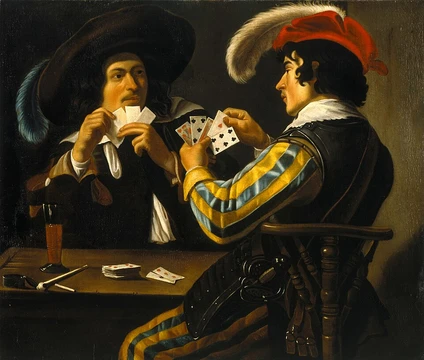
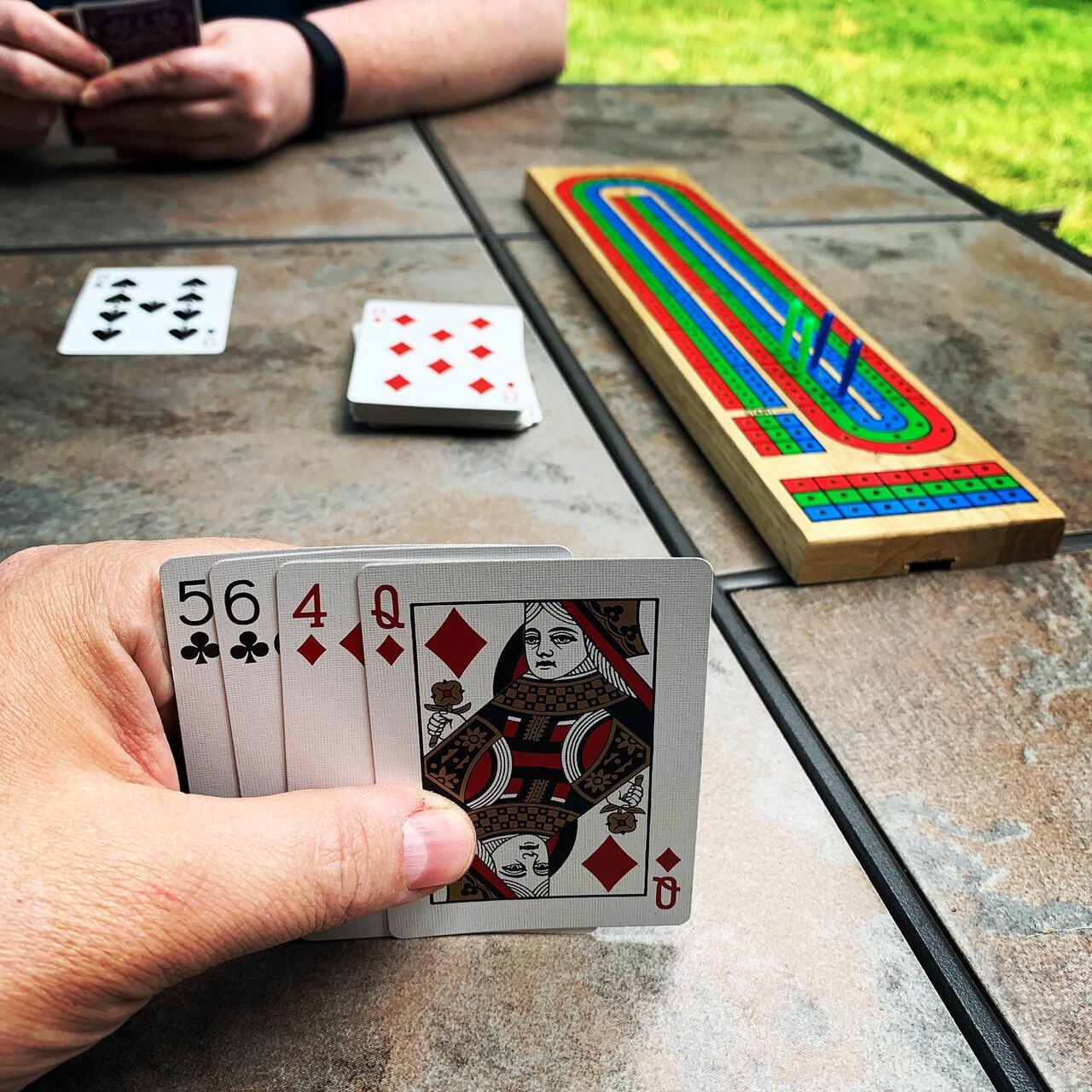
Cribbage
A card game of scoring combinations and tactical play.

J Wynia from Minneapolis, United States · CC BY 2.0
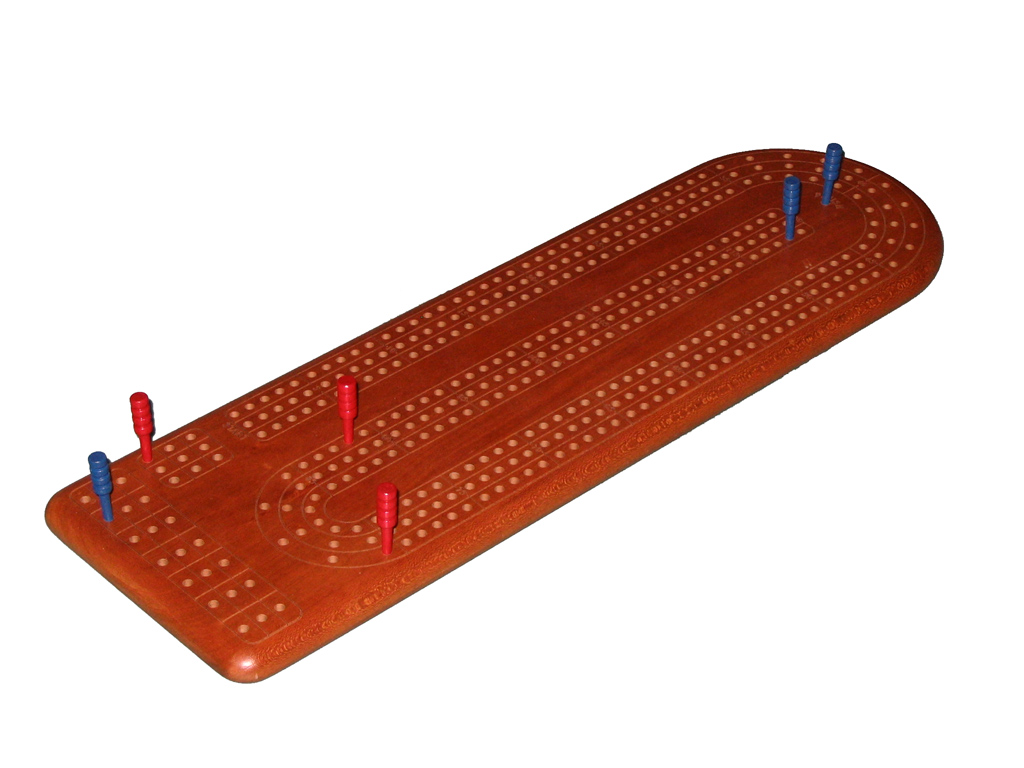
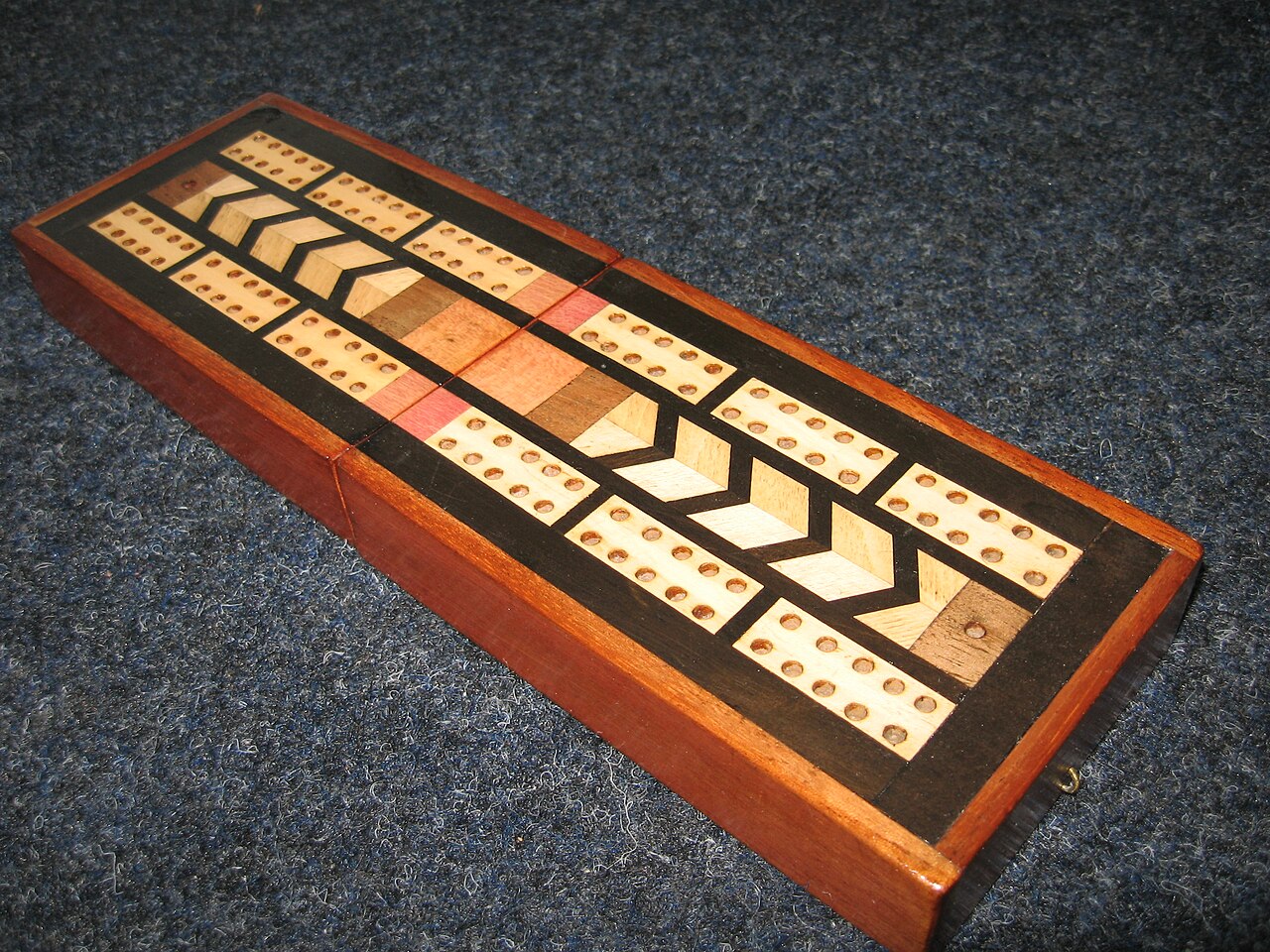
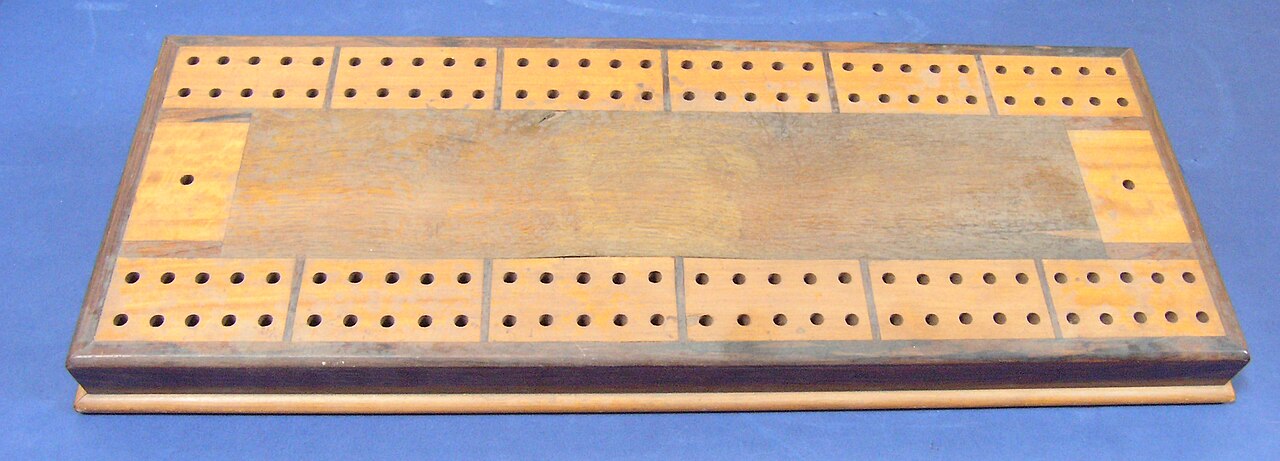
Cribbage, also known as crib, is a card game traditionally for two players that involves playing and grouping cards in combinations to gain points. It can be adapted for three or four players. The game is characterized by its use of a cribbage board for score-keeping, a crib (or box), two distinct scoring stages, and a unique scoring system including points for card combinations totaling 15. Cribbage has relatively few rules but many subtleties, contributing to its ongoing appeal and popularity.
- Type
- Card game
- Players
- 2 (adaptable to 3 or 4)
- Origin
- England
- Inventor
- Sir John Suckling (attributed)
- Known for
- Cribbage board, crib, scoring for 15s, runs, pairs, flushes
Lore & Background
Cribbage has been characterized as 'Britain's national card game'. According to John Aubrey, it was created by the English poet Sir John Suckling in the early 17th century as a derivation of the game 'noddy'. While noddy has become a historical, rarely-played game, cribbage has continued as a popular game in the English-speaking world. The continuing popularity of cribbage is due in some part to the influence of the Victorian novelist Charles Dickens, who depicted the game in his novel The Old Curiosity Shop. Cribbage was popular among prospectors in the American West, and the small mining town of Nelson, Montana, to this day has a sign proclaiming it the 'Cribbage Capital of the World'. Cribbage is played by American submariners, serving as a common pastime. The wardroom of the oldest active submarine in the United States Pacific Fleet carries on board the personal cribbage board of World War II submarine commander and Medal of Honor recipient Rear Admiral Dick O'Kane, and upon the boat's decommissioning, the board is transferred to the next-oldest boat. Both cribbage and its close relative costly colours are descended from the old English card game of noddy. Cribbage added the distinctive feature of a crib and changed the scoring system for points, whereas costly colours added more combinations but retained the original noddy scoring scheme.
Reader's Guide
Cribbage is a card game of significant historical and cultural importance, particularly in the English-speaking world. Its creation is attributed to the English poet Sir John Suckling in the early 17th century, derived from the game noddy. The game's distinctive features include a cribbage board for scoring, a crib (or box) of discarded cards used by the dealer, and a unique scoring system that rewards combinations totaling 15, runs, pairs, flushes, and specific jacks. Play proceeds through hands consisting of a deal, the play (where players lay cards and score during play), and the show (where hands and the crib are scored). Tactical play varies based on opponent's cards, remaining deck, and board position, and an experienced player gains an edge through strategy and odds calculation. The game's popularity was bolstered by Charles Dickens' depiction in The Old Curiosity Shop, and it became a pastime among American West prospectors and U.S. Navy submariners. The town of Nelson, Montana, claims the title 'Cribbage Capital of the World'. Cribbage's enduring appeal lies in its blend of luck, skill, and subtlety, with games often decided by a single point.
Did You Know?
- Cribbage has been characterized as 'Britain's national card game'.
- The game was created by the English poet Sir John Suckling in the early 17th century as a derivation of the game 'noddy'.
- The small mining town of Nelson, Montana, has a sign proclaiming it the 'Cribbage Capital of the World'.
- The personal cribbage board of World War II submarine commander Rear Admiral Dick O'Kane is carried on the oldest active submarine in the U.S. Pacific Fleet.
The Deal and the Crib
Cribbage begins with a standard 52-card deck minus the jokers, where all suits hold equal standing. Players determine the first dealer by cutting for the lowest card, with the ace counting as one. In tournament settings, the dealer must shuffle and offer the deck to the player on their right to cut before dealing singly to each player, starting with the player on the dealer's left. For a two-player game, each receives six cards; for three or four players, five each. After receiving their cards, every player retains four and discards the remainder face-down to form the crib, which belongs exclusively to the dealer. In a three-player game, a single card is dealt face-down in front of the dealer to seed the crib. A critical strategic wrinkle emerges here: because the crib is scored by the dealer, winning the first deal grants an extra crib if the game concludes after an odd number of deals—a margin that can decide the entire contest.
The Pegging Phase
Once hands are set, the player to the dealer's left cuts the remaining deck, leaving at least four cards, and the dealer flips the top card of the bottom section face-up as the starter. If it is a jack, the dealer immediately scores two points for his heels. The pegging then begins, with players taking turns clockwise, laying one visible card at a time while announcing the running total. Aces count as one, face cards as ten, and the cumulative count must never exceed thirty-one. A player who cannot play without busting says Go, and the last player to lay a card earns two points for hitting exactly thirty-one, or one point otherwise. Along the way, players accumulate points for making fifteen, completing runs of three through seven, and forming pairs, pair royals, or quads. Combinations cannot span a reset, and a pair interrupts any run in progress. The first player to reach one hundred and twenty-one points claims victory.
The Show
After all cards have been played and pegging is complete, the game enters its final scoring phase, known as the show. Beginning with the player on the dealer's left, each player spreads their four retained cards on the table and calculates their score. The starter card, revealed at the outset, functions as a universal fifth card shared across every hand, so each player's total is derived from their own four cards combined with that common card. Scoring combinations include two points for each distinct pairing of two or more cards that sums to exactly fifteen, runs of three through five consecutive cards worth three to five points respectively, pairs worth two points, pair royals worth six, and double pair royals worth twelve. A flush of four cards in the same suit earns four points. This phase rewards careful hand construction during the initial discard, as players must balance what they keep for the show against what they need for pegging.
Strategic Architecture and Game Structure
Cribbage's design weaves together three distinct scoring opportunities—the crib, the pegging, and the show—into a single contest to one hundred and twenty-one points. The dealer's position carries a structural advantage: they score the crib, collect points for a jack starter, and benefit from the extra crib in odd-numbered deal sequences. During pegging, players must make real-time decisions about which card to lay, weighing immediate scoring combinations against preserving options for later turns. A pair of threes played early, for instance, scores two points for the second card and eight for the third, yet those cards are no longer available for the show. The rule that combinations cannot span a reset, and that a pair breaks a run, forces players to think several moves ahead. The game's fixed target of one hundred and twenty-one, combined with the alternating dealer rotation, creates a tight, self-contained structure where every card laid and every discard carries measurable weight toward the final tally.
Gallery

More in Card Games 1-22
Spotted an error? Know more?
This is a living reference — every entry is fact-audited, and reader corrections feed straight into our audit queue. Suggest an edit · See this site's audit record